MA PRÉFACE À L’EXCELLENT LIVRE DE STÉPHANE VIAL, L’ETRE ET L’ÉCRAN
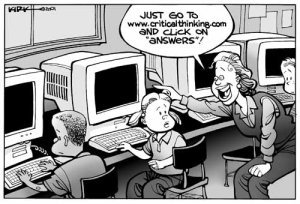
Au-delà de la simple posture de consommateur ou d’utilisateur, si nous voulons y voir un peu plus clair sur la manière dont nous entremêlons nos pensées et nos symboles dans le médium algorithmique, si nous voulons comprendre la mutation numérique en cours et nous donner les moyens de peser sur son déroulement, il est nécessaire de garder les deux yeux bien ouverts: aussi bien l’oeil critique que l’oeil visionnaire.
L’oeil critique
Du côté de l’oeil critique, apprenons d’abord à sourire devant les slogans de pacotille, les mots-clic du marketing, les courses au Klout et les poses de « rebelle du libre ». L’Internet est peut-être pour certains une nouvelle religion. Pourquoi pas? Mais de grâce, ne nous construisons pas de nouvelles idoles : l’Internet n’est ni un acteur, ni une source d’information, ni une solution universelle, ni un modèle (Evegeny Morozov nous explique fort bien tout cela dans son dernier livre To Save Everything, Click Here: The Folly of Technological Solutionism).
Ce n’est pas un acteur. Le nouveau médium algorithmique qui se complexifie sous nos doigts et nos regards entrecroisés n’est certainement pas un acteur homogène, mais plutôt l’assemblage hypercomplexe d’une multitude d’acteurs humains et non-humains de toutes natures, un assemblage en transformation constante et rapide, un métamédium qui abrite et entremêle une grande diversité de médias dont chacun réclame une analyse particulière dans un contexte socio-historique particulier. Le médium algorithmique ne prend pas de décisions et n’agit pas de manière autonome.
Ce n’est pas non plus une source d’information : seules les personnes et les institutions qui s’y expriment sont de véritables sources. La confusion, entretenue par de nombreux journalistes, vient de ce que, dans les médias de diffusion unilatérale traditionnels (organes de presse, radios, télévisions), le canal se confond avec l’émetteur. Mais, dans le nouvel environnement de communication, les mêmes plateformes peuvent être utilisées par de nombreuses sources indépendantes.
Le simple bon sens nous suggère également que ni l’Internet, ni même le bon usage de l’Internet, fût-ce selon les lignes du crowdsourcing ou de l’open data, ne peuvent évidemment fournir une solution universelle et un peu magique à tous les problèmes économiques, sociaux, culturels ou politiques. Lorsque presque tout le monde n’a plus que les mots de « disruption », d’innovation, de fonctionnement en réseau et d’intelligence collective à la bouche, ces mots d’ordre (voir l’analyse philosophique du mot d’ordre par Deleuze et Guattari dans Mille Plateaux) n’ont plus aucun sens parce qu’ils ne font plus de différence.
Dans le même ordre d’idée l’Internet n’est pas non plus un modèle. Wikipedia (depuis 2001) représente sans aucun doute une réussite dans le domaine du travail collaboratif et de la diffusion des connaissances. Mais faut-il pour autant imiter Wikipedia pour des projets et dans des contextes bien différents de celui de l’encyclopédie en ligne? On peut en dire autant d’autres réussites comme celles des logiciels à sources ouverte (depuis 1983) ou de la licence Creative Commons (depuis 2001). Wikipedia et la propriété intellectuelle libre sont désormais des institutions interdépendantes et bien établies. S’il faut copier la communauté Wikipedia ou celle du « libre », ce serait plutôt dans leur capacité à concevoir – presque de toutes pièces – les modèles singuliers dont elles avaient besoin pour leurs projet à elles. Nous sommes en 2013 et il n’y a aucune raison pour que de nouveaux modèles originaux ne viennent pas s’ajouter à ceux-là, en vue de projets peut-être plus ambitieux. Nous avons certes à faire fructifier les héritages technique, juridique et organisationnel du mouvement socio-technique multiforme qui a porté l’émergence du médium algorithmique, mais pourquoi devrions-nous nous conformer à de quelconques modèles?
Pour en finir avec l’oeil critique, examinons quelques mots d’ordre en vogue tels que les big data et les digital humanities. Il est clair que l’immensité des données publiques disponibles appelle un effort concerté pour en extraire le maximum d’information utile. Mais les tenants des big data entretiennent l’illusion épistémologique qu’ils pourraient se passer de théories et qu’il leur est possible de faire émerger la connaissance d’une « simple » analyse statistique des données. Comme si la sélection des ensembles de données, le choix des catégories qui leur sont appliquées et la conception des algorithmes qui les traitent ne relevaient d’aucun d’aucun point de vue pragmatique, d’aucune hypothèse particulière et, en somme, d’aucune théorie! Mais peut-on demander à des ingénieurs ou à des journalistes, aussi bien intentionnés soient-ils, d’expliciter des théories en sciences humaines, alors que les chercheurs en sciences humaines eux-mêmes en fournissent si peu, si mal, de si simplistes ou de si limitées à telle ou telle localité?
Cela me mène à l’engouement contemporain pour les digital humanities. L’effort pour éditer et mettre en libre accès les données des sciences humaines, pour traiter ces données avec les outils des big data et pour organiser des communautés de chercheurs autour de ce traitement est certes fort louable. Hélas, je ne discerne pour l’instant aucun travail de fond pour résoudre les immenses problèmes de fragmentation disciplinaire, de testabilité des hypothèses et d’hyper-localité théorique qui empêchent les sciences humaines d’émerger de leur moyen-âge épistémologique. Les outils techniques ne suffisent pas! Quand les sciences humaines se délivreront-elles du sortilège post-moderniste qui leur interdit l’accès à la connaissance scientifique et au dialogue ouvert dans l’universel ? Pourquoi tant de chercheurs, pourtant très doués, se cantonnent-ils à la dénonciation politico-économique, à la protection ou à l’attaque de telle ou telle « identité » ou à l’enfermement disciplinaire? Sans doute faudra-t-il mobiliser de nouveaux instruments algorithmiques (la partie digital), mais il faudra surtout que la communauté des sciences humaines découvre un sens nouveau à sa mission (la partie humanities).
L’oeil visionnaire
Je disais en commençant que nous avions besoin – pour comprendre et pour agir – d’ouvrir nos deux yeux : l’oeil critique et l’oeil visionnaire. L’oeil critique dissout les idoles intellectuelles qui obstruent le champ cognitif. L’oeil visionnaire discerne de nouveaux problèmes, envisage les avenirs dissimulés dans la brume de l’avenir et crée. C’est là qu’intervient notamment la perspective du design, si bien évoquée par Stéphane Vial au sixième chapitre de L’être et l’écran. Mais avant de songer à créer, il faut d’abord discerner. L’humanité est la seule espèce animale à manipuler des symboles et cette singularité lui a donné accès à la conscience réflexive, à la culture et à l’histoire. Dès lors qu’un nouvel univers de communication – un univers qui est évidemment le fruit de sa propre activité – augmente et modifie sa capacité de manipulation symbolique, c’est l’être même de l’humanité – sa singularité ontologique – qui est appelé à se reconstruire. Or le médium algorithmique rassemble et interconnecte sur un mode ubiquitaire aussi bien les flots de données numériques émis par nos activités que les armées d’automates symboliques qui transforment et nous présentent ces données. Dès le XXe siècle, quelques visionnaires avaient osé regarder en face la mutation anthropologique qu’implique ce nouveau régime de manipulation symbolique. Il est temps maintenant que les conditions techno-sociales de la mutation en cours, les problèmes béants qu’elle nous pose et les opportunités inouïes qu’elle nous ouvre soient frontalement pris en compte par la communauté des chercheurs en sciences humaines. Comme le montre parfaitement le livre de Stéfane Vial, la « révolution numérique » ne concerne pas tant les apparences, ou l’observable, auquel les journalistes se limitent par profession, que le système organisateur de nos perceptions, de nos pensées et de nos relations, leur nouveau mode d’apparition, leur fabrique cognitive, leur nature naturante. Ouvrons donc notre oeil visionnaire, traversons le miroir et commençons à explorer le changement de transcendantal historique, l’émergence d’une nouvelle épistémè. Il est clair pour moi, comme je crois pour Stéfane Vial et pour bien d’autres, que ce changement est oeuvre humaine, qu’il n’est pas achevé et qu’il offre encore de nombreuses possibilités d’inflexion et d’intervention créative. Mais pour que les virtualités les plus fécondes de notre évolution historique et culturelle s’actualisent, encore faut-il les apercevoir et se donner les moyens non seulement techniques mais aussi symboliques, théoriques et organisationnels de les réaliser.
Il y a certes quelques exigences à respecter : des exigences culturelles, économiques, techniques, existentielles. Culturelles : ne mépriser ni les traditions locales, ni les traditions transmises par les générations passées ; respecter les trésors de savoir et la sagesse contenues dans les institutions vivantes. Economiques : quelles que soient les options choisies (public, privé, commercial, non commercial, etc.) nos projets doivent être viables. Techniques : familiarisons-nous avec les algorithmes, leur calculabilité, leur complexité. Existentielles : le design des expériences doit prendre en compte l’existence corporelle, relationnelle, affective et esthétique des humains engagés dans les dispositifs d’interaction techniques. Une fois ces exigences respectées, la liberté créatrice n’a pas de limite.
Pour ma part, je crois que la direction d’évolution la plus prometteuse est celle d’un saut de réflexivité de l’intelligence collective, dans une perspective générale de développement humain (voir La sphère sémantique). Ce projet culturel et cognitif s’appuie sur un dispositif techno-symbolique de mon invention : IEML. Ce métalangage algorithmique s’auto-traduit dans toutes les langues et fournit aux sciences humaines un puissant outil de catégorisation et d’explicitation théorique. Ce projet n’en exclut aucun autre. J’invite à penser et à dialoguer au sein d’une universalité ouverte. Ma philosophie, comme celle de Stéphane Vial, accueille l’émergence, la durée et l’évolution de singularités créatives et interprétatives qui soient à la fois distinctes et interdépendantes, compétitives et coopératives.
Il semble que nous ayons oublié pourquoi nous avons édifié le médium algorithmique. Etait-ce pour devenir millionnaire? Etait-ce pour révéler enfin aux peuples opprimés le « marketing des médias sociaux » qu’ils attendaient avec tant d’espoir? Etait-ce pour que chacun, des enfants des écoles aux armées les plus puissantes en passant par les entreprises et les partis politiques, puisse surveiller, calomnier et détruire ses ennemis avec des moyens plus puissants? Stéphane Vial nous rappelle ce que nous avons visé, ce que nous visons toujours, ce but qui semble se dérober au fur et à mesure que nous le poursuivons et qui cependant oriente notre course : une révélation dans les sujets.